Josh Hobbs - Austin, Texas
512-351-5762
5,500+ Installations in the Austin TX area.
Solar Window Screens -> Questions & Answers
Page Menu - Solar Window Screens - Questions & Answers
-
How many solar screens install per window? How many windows does one solar screen cover?
-
How are the solar screens installed? How do you put them on windows?
-
Will sun shade screens for windows keep bugs out? Replace the need for insect bug screens.
-
Do we need to put solar screens on all windows, or can we just do some windows?
-
Visibility looking through the sunshade fabric. How well can I see through the fabric?
-
What kind of privacy to expect. Can people see in from the outside?
-
What's the difference between window tint/film and solar screens?
Question : If I have side-by-side windows (windows that are installed next to each other, fitted together), will you mount one solar screen over all of them, or will you build one solar screen for each window?
& Answer : We will build and install one solar screen for each window. In some cases, like a rectangular non-opening window with a half-circle window above it, we can create one large solar screen for both.
Watch this video to understand how we install solar screens on side-by-side windows. If you choose from a vendor that will install a single large screen for multiple side-by-side windows, you will lose bug protection, as it won't fit flush against the windows and will create gaps.
& my Video Answer : Here is my explanation of why solar screens will be installed on each window, not over multiple windows.


Solar Window Screens - INSTALLATION Q&A's
Question : Can a Solar Screen be installed on a Door ?
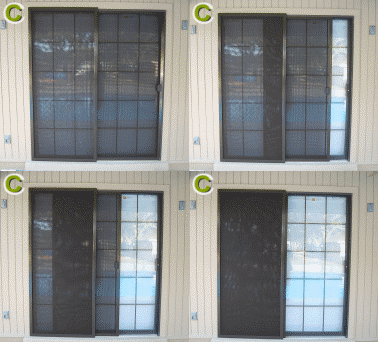
& Answer : Absolutely! For swing doors, we install the solar screen within the molding of the window frame (see Pictures A & B). For a flat installed rate of $150 (if accompanied by an order for solar window screens for your house), we can custom build an aluminum-framed sliding solar screen door using either our 80% or 90% fabric (see Picture C).
Our sliding solar screen doors are specifically built to fit the measurements of your sliding door frame, and we use roll-formed aluminum instead of steel. Unlike steel, which can rust, our sturdy and heavy-duty aluminum framing will not. Although our heavier-duty aluminum framing costs more to build, it is definitely worth it for its durability. The framing we use is superior to off-the-shelf options, being very sturdy and long-lasting.
We also offer six different colors of fabric options. Additionally, if you would like to cover the non-opening portion of the door, we can build a pocket (as shown in Picture C). This pocket will be mounted on the outside of your sliding door frame, covering the non-opening panel. When the solar screen door is in the open position, it will slide behind this pocket.
The installed cost for the pocket is also a flat rate of $150. For both the sliding screen door and the pocket, made from the same heavy-duty frame and rolled with either our 80% or 90% solar screen fabric, the total installed cost is $300 if accompanied by a solar window screen order of 581 inches or more. If you only want the sliding door and pocket without needing solar window screens, the installed cost will still be $300, but there will be an additional measuring and installation trip cost of $130.
For example, if you want one pocket and door set, the total cost will be $430. If you want two pocket and door sets, the cost will be $730. You can also choose to buy our sliding door screens for self-installation from HobbsScreens.com.
& my Video Answer : Here I discuss installing solar screens for swing doors and sliding doors. How to shade a door from the sun.




Question : How will you mount (install) our new solar screens? Are they removable? Can I take the screens off to wash my windows?
& Answer : Our screens are easily removable. They are typically attached with small 3/4" self-tapping screws. Please refer to the pictures below for illustrations.
Some windows are designed to accommodate full-sized screens, featuring tracks at both the top and bottom to hold the screen in place. If a window doesn't have this track, the screen is attached to the outer part of the window frame using self-tapping screws. For detailed illustrations, see the pictures below.
For a comprehensive collection of my videos on screen installation, please visit my JoshHobbs.com YouTube channel. Please note that if you remove the screens within the two-year warranty period, the installation portion of the warranty will be void once the screens are removed.
& my Video Answer : This video answer explains the various ways my solar screens are installed on windows.


Question : Will solar screens keep the flying bugs out like my current insect screens do ?
& Answer : Absolutely! The weave of our solar screen material is significantly tighter than that of your current insect screen material. However, it's important to note that all bug screens are designed to keep flying insects out, not crawling insects. Insect or bug window screens are effective against flying bugs. Unless your screens are sealed completely around the edges with a material like silicone, crawling insects will find a way to get through. This applies to both our solar screens and the insect screens from your current manufacturer.
Question : Do the solar screens fit over our current insect window screens ? Or, do you remove our current insect screens before you install the new solar screens ?
& Answer : We will remove the insect screens before installing your new solar screens. The solar screens will replace your current insect screens.
Increasingly, we are encountering windows that require the bug screens to be removed from the inside. If your windows are of this type, we will leave the bug screens in place for you to take out. You can remove them either before we arrive at your home or after the solar screens have been installed.
If you have new builder-grade vinyl windows with bug screens that come out from the inside, please follow these instructions to remove them:
1. Lift the bottom window pane up about 2 inches.
2. Locate the slide latches on the top of that window pane.
3. Slide those latches inward (toward each other).
4. Tilt the bottom window pane toward you.
5. Turn the acorn latches on the screen and remove the screen toward you.
Question : Do I need to put solar screens on all of my windows? Can I just put a solar screen here and there as I need it? What will it look like if I have windows with solar screens and others without? Will my home look weird if I have some solar screens on some windows and not others?
& Answer : I strongly recommend that you do NOT install screens randomly for aesthetic reasons. You don’t want any side of your home to appear unfinished. If you decide to add screens to the front of your house, I suggest you install them on all the windows, rather than just a few. For the back of the home, you can be more flexible since it's not visible from the street. The following pictures will illustrate what it looks like to leave windows uncovered.
& my Video Answer : Watch and hear my video explanation of why you should not leave windows uncovered. Why you should shade all windows.


_jp.jpg)
Question : When you access my roof, will you protect my gutters? I have had people use ladders that dented and damaged my gutters, can you keep from doing that yourself?
& Answer : Yes, we always use arms for our extension ladders. We use these arms to stabilize our extension ladders and to reach over a gutter, not on it. We will never rest extension ladders against your gutters.
_JP.jpg)
_JP.jpg)
_jp.jpg)
_jp.jpg)
Question : You have two density options 80% and 90%, what’s the difference between the two? Does 90% mean better? Is your 90% solar screen material much better than your 80% material?
& Answer : The difference between the 80% and 90% screen materials is straightforward: a 90% screen offers 10% more shading than an 80% screen. For west-facing windows that are directly affected by sunlight for more than four hours a day, we recommend using the denser 90% material. For the rest of your windows, the 80% material is suitable.
The 80% solar shade is an excellent shading option. During the long, hot summers, west-facing windows can receive direct sunlight for up to eight hours a day when the sun sets around 8:30 PM. From June through August, it can feel like the sun never goes down; it relentlessly shines on your windows. In these brutal summer months, the additional 10% shading provided by the 90% material is highly beneficial.
You can still see through the 90% sun shade fabric quite well. Additionally, there’s no need to worry about the 90% fabric making the interior of your home too dark. Even when the sun is intensely shining on the fabric, plenty of filtered light will still come through.
Another significant advantage of using solar screens is that they allow you to open your blinds to let in more light. With the solar screens blocking the sun's rays from entering the house and hitting your windows, you can pull your blinds wide open without concern. This is important because the screens provide excellent daytime privacy, ensuring that no one can see in. This feature is especially valuable.
& my Video Answer : Listen to this, where I quickly, but in detail, explain the difference between the 80% fabric and the 90% fabric. Just like I would over the phone if you called me.


Solar Window Screens - Materials Q&A's
Question : Does any one color of shade screen fabric work better than the others? Does a lighter material let in more sunlight? Can I see out of one color better than the others? Do all five fabric colors come in the 80% and 90% fabric? Is one color of fabric more difficult to maintain than the others?
& Answer : All six fabric colors perform the same way; they either have an 80% weave or a 90% weave, allowing 20% or 10% of the sun's rays to pass through. The difference in colors is purely aesthetic, allowing you to choose an option that complements your home's exterior.
Each of the six fabric colors offers the same level of shading, either 80% or 90%. No color provides better shading than another; the shading level depends on the density of the materials. A 90% weave provides 10% more shading than an 80% weave. When looking out, you may notice that you can see through darker fabrics (chocolate, mocha, and black) slightly better than lighter colors. Your eyes tend to overlook the darker fabrics, whereas lighter colors can be slightly more noticeable—though not significantly so. In the case of the Stucco fabric, which features a patterned weave, it may catch the eye a bit more. However, I have never received complaints regarding the visibility of the Stucco fabric; the patterned weave might be noticeable to me, but customers generally do not express any negative feedback.
Lighter color fabrics require more maintenance over the years, as they show dust and grime more easily than darker fabrics (chocolate, mocha, and black). Fortunately, cleaning the screens is manageable. If you're willing to clean them every two to three years, you can keep the lighter color fabric looking new. Our solar window screens are very durable and can withstand cleaning. Additionally, you may hire our window cleaners to clean both the solar screens and your windows.
Question : How well will I be able to see through the solar screen material?
& Answer : Our solar screen material offers exceptional visibility. The even weave of the fabric provides the best outward visibility of all solar screen fabrics currently available. Looking through the 80% material is quite similar to looking through standard bug screens. While the 90% material is slightly denser, you can still see through it very well.
& my Video Answer : Watch my awesome video explanation here that I made, which points out the differences between looking through the 80% and 90% fabrics.


Question : With regards to privacy, will solar screens replace the need for window blinds or shutters?
& Answer : Solar screens will not eliminate the need for window treatments such as blinds and shutters. While solar screens do provide privacy during the day, they do not offer privacy at night. Therefore, window blinds and shutters are still necessary for evening privacy.
& my Video Answer : Here within this video answer, I explain privacy, what kind of privacy to expect from the solar screens.


Question : How much light will the solar screens cut out in my home from the outside? With the solar screens should I expect the inside of my house to become dark ?
& Answer : I often tell people that a great way to visualize this concept is to think about the light that comes through windows currently covered by your patio. Another example is to imagine a fully shaded tree positioned between your windows and the sun; this is similar to how solar screens work by allowing light to filter through. You will enjoy shade without creating darkness, resulting in plenty of filtered light inside your home. This question often arises among our customers, but it is usually dismissed as a concern once the screens are installed.


Question : What kind of solar screen fabric do you use? What are the best solar screen fabrics out there to make solar window screens out of?
& Answer : We use a sunshade fabric manufactured by Twitchell called Textilene. It is one of the strongest solar screen fabrics available. You cannot tear or pull it apart with your bare hands. This fabric consists of woven yarn coated with a highly durable and super-strong PVC coating. It is also designed to be pet-resistant, ensuring durability. In sunny conditions, it's essential to choose the strongest fabric available, and Twitchell Textilene delivers on that.
Our Twitchell Textilene fabric is manufactured in the USA, specifically in Alabama. There are three primary PVC-coated fabrics on the market: Twitchell Textilene, Phifer Suntex, and St. Gobain Adfors Sunshield. I know that Twitchell manufactures its fabric in the USA, and while Phifer used to as well, I'm not certain about their current manufacturing location. St. Gobain Adfors produces its fabric in Mexico. All of these fabrics are incredibly strong and well-made, so you can't go wrong choosing any of these three PVC-coated options.
Question : I hear and have read a lot about frame size for the solar screens, what do you use?
& Answer : For all assemblies that exceed 30" x 50", I use a stronger, heavier-duty 1" wide framing. For smaller assemblies, I opt for 3/4" wide framing. The wider framing does not offer any benefits for the smaller assemblies, and in my opinion, it can look awkward to use the larger frame for a small screen because it draws too much attention. I've seen installations around Austin where the 1" frame has been used for smaller screens, and they appear unbalanced because the larger frame stands out too much. It becomes overly emphasized due to its size.

For more Q&A's about my Solar Window Screen Pricing"
Visit my Solar Window Screen Pricing page
Question : Can I get grid patterns on my solar window screens? What are grid patterns for solar screens? What is the additional cost for grid patterns?
& Answer : We've made it easy to get pricing for grid patterns on our solar screens! To upgrade your solar screens, simply add $45 for each grid pattern upgrade. This flat fee of $45 will transform any solar window screen we create to feature a grid pattern. We will match the grid pattern on your front windows if they currently have one. If they don’t, we can implement a new pattern for you.
& my Video Answer : In this video answer of mine, I explain grid patterns. Why you would want them and all questions about them.


Solar Window Screens - PRICING Q&A's
Question : Do you take on small jobs, will you take on a one or two window (solar screen) project? I just want to put shade screens over 2 or 3 windows of my home, will you take on a small project like this?
& Answer : My minimum order for installed solar screens is $430. For any size order of 80% fabric measuring 581 inches or less, there is a flat installed rate of $430. If you would like to upgrade to 90% fabric, the cost is an additional $8 for each solar screen. If your order includes arches, there will be an extra charge of $25 for each arch.. Please see our "Do it yourself Estimate Worksheet" for a clear illustration of our installed pricing. Or, enter the count of windows you want the solar screens for into our Solar Screen Pricing Calculator for a quick estimated installed cost. I only offer the $430 in certain parts of town. Click here to see my map.
Question : What is your Austin TX sun protection screen services installation area ?
& Answer : My Austin Texas solar screen installation area includes the following surrounding areas - Pflugerville, Round Rock, Hutto, Georgetown, Leander, Cedar Park, Buda and Manor. Here is my service area map,
Question : Can Sun Control Screens be installed on the windows of my commercial building ?
& Answer : If the window is made of glass, we can install a solar screen over it. For more information, please visit my detailed page on commercial solar screens for windows. Similar to my residential solar screen installations in Austin, TX, I do not install screens on third-floor windows. Additionally, since this is a commercial building, it is advisable to obtain permission from the building owner, as the screens will be affixed to the outside of the windows. Please note that commercial pricing differs from residential pricing. For my installed, sales-tax included commercial pricing, please print our


Question : I know you are a Window Shade Screen installer, but how about bug (insect) screens for windows, can you make and install those for me as well?
& Answer : As of 2021, I create all my window bug screens using a sturdy 1-inch solar frame and durable Pool and Patio fabric by Adfors. This combination results in exceptionally robust and long-lasting screens that will not bend, flex, or bow when removed or installed. I avoid using plastic corners that can crack in the sun; instead, my corners are miter cut with no exposed plastic.
Pricing for my insect bug screens is a flat rate of $35 per screen under the following conditions: a minimum order of installed solar screens, an Austin, TX patio roller shade order, or a minimum order of replacement bug screens. The first 9 screens cost $430, and each additional screen is $35. My $35 installed priced bug screens are designed for window openings, not the entire window, and can fit up to 46 inches wide and 34 inches high.


Question : I do not live in the Austin TX area, -will you ship your screens to me ? Can I order the screens from you, then come by to pick them up to install myself.
& Answer : I do not ship screens, however we do have a Pick-Up facility. As a Retail customer or Wholesale customer you can order your screens through our pickup facilities website www.HobbsScreens.com and pick your screens up from our North Austin pickup facility to install yourself. On the www.HobbsScreens.com website, there are thorough measure and installation instructions to guide you through the process of doing a self installation.
Question : What is the Warranty of your solar screens ?
& Answer : We provide a two-year warranty on our installations and screens. Please be aware that this warranty is limited and does not cover damage caused by personal use or storms. Our installation warranty remains valid for up to two years, or until the installation is altered by the removal of the screens. If the screens are removed for cleaning the windows or any other reason, the installation warranty will end at the time of removal; however, this does not affect the warranty for the screen itself.
Solar screens for windows have no movable parts, so once they are installed correctly, there typically isn’t anything that can go wrong with them. If a screen is removed, we strongly encourage homeowners to ensure that it is put back 100% into the tracks (channels) from which it came. It’s important not to bend the screens during removal, and if there are clips, make sure they are securely fastened in place as they were when we installed the screens.
We strongly recommend that anyone removing a screen should avoid using a drill unless they are proficient and experienced, as this skill is not common among most people. Using a drill too quickly can strip the holes in the window frame. Additionally, over-torquing a screw while reattaching it can damage the screen frame. We advise removing screws by hand and encourage your window washer to follow the same practice.
Vinyl windows do not have upper and lower tracks designed to hold full-sized solar screens. The methods for installing solar screens on vinyl and other types of windows are explained in detail here. Vinyl window holes are particularly easy to strip out because they are made of a plastic-like material rather than metal. When we remove screens from vinyl windows, we do so by hand and do not use drills, as vinyl is not as strong as metal.
Solar screens for vinyl windows are attached using small self-tapping screws. Due to the vinyl material, screws can sometimes be pulled out by strong winds. Please note that we do not warrant screens that are violently ripped off windows by storms. If this happens, feel free to contact me. I can help you source a new screen for self-installation, or you can hire us to deliver and install it for you.
Solar Window Screens - WARRANTY Q&A's
Question : Do your solar screens fade? What's the life expectancy of your solar screens? My West facing windows get a brutal amount of direct sun, will your solar screens last very long?
& Answer : Our Made in USA exterior solar screen fabric is specifically designed to withstand harsh, sunny climates.
I am consistently amazed when I drive by installations we've completed over the years and see how well the fabric of our solar screens has held up in direct, west-facing sunlight. Among all the solar screen fabrics on the market, ours is the only one that I chose for my own home, and it’s the only one I would recommend for yours. Compromising quality to save a few dollars makes no sense to me.
Our solar screen fabric is by far the most durable, strongest, and best available. Over the years, I've seen every type of solar screen fabric installed on homes, and it often horrifies me to see screens that have faded within several years. It saddens me that vendors sell inferior products just to attract customers with a lower price, which is often only marginally cheaper.
The pictures below don’t truly capture how well our solar screen fabric performs, as they were taken with my iPhone while driving by these homes last week. All of these houses face west, and they look just as good today as they did on the day we installed their screens. You won’t find a better-made solar screen that lasts longer in direct sunlight than ours! "Why gamble with the rest when you can be guaranteed the best at JoshHobbs.com?"


Question : Do you dispose of our old screens ? What do you do with our old screens ? Will you haul them off for us ?
& Answer : We will gladly haul away your old screens for you. However, if your current insect screens are relatively new and in good condition, we recommend that you keep them stored for potential future use. For instance, having the original insect screens available when you sell your house down the line can be advantageous.
If your old screens are in poor condition, particularly if they are old solar screens, we will automatically take them away for you. If you wish to keep your old screens and they are still on your windows when we arrive for installation, please inform us in advance so that we know to leave them behind for you.
Most customers clean their windows before we arrive and either leave the screens outside for us to haul away or put them away for storage.
If you have single-hung vinyl windows manufactured between 2018 and today and need help removing the existing bug screens, please watch the following video. These insect screens must be removed from the inside; I am unable to take them out from the outside when installing the new solar screens.
It's important to note that the bug screens do not need to be removed immediately and can remain in place until your new solar screens are installed. I recommend waiting until the new solar screens are in place before deciding to remove the bug screens. Keeping the bug screens up can provide an additional layer of protection against insects, resulting in two levels of bug screen coverage. However, be aware that looking through two sets of screens may create a blurry view, which you might find undesirable.
Solar Window Screens - GENERAL Q&A's
Question : What's the difference between Window Tint, Window Film and Solar Screens ?
& Answer : There is a significant difference between window tinting and solar screens. Window tinting primarily blocks the sun's UV rays from penetrating the glass and entering the interior of your home. While window film and tint can help prevent fading of your belongings and reduce UV exposure, they only provide a fraction of the shade that solar screens offer.
Solar screens not only block the sun's rays from entering your home through the windows, but they also keep the windows themselves cooler. When windows heat up from direct sunlight, the heat radiates into the home. You can think of it like leaving an oven on with the door closed; even though the heat is contained, it still radiates through the glass door. The purpose of a solar screen is to provide shade for the window, preventing the sun's rays from heating the glass and allowing that heat to enter your living space.
It's important to note that window film and tint are installed on the inside pane of double-paned glass windows. This means that while the sun can penetrate the exterior pane, it gets absorbed by the interior pane, causing it to become extremely hot. Many window manufacturers will void the warranty if window tint or film is applied due to this issue. When the interior pane of glass becomes excessively hot, it is more susceptible to cracking.
The reason car windows with tint or film do not crack in the same way is twofold: first, in double-paned windows, heat gets trapped between the two panes, raising the temperature of the air inside and adding to the heat of the interior thn pane of glass; and second, car windows are made with significantly thicker and tempered glass, designed to withstand high temperatures and stress.
Question : For future reference, how do we clean the screens? Do we take them down to clean them? How often should we clean them? Do they even need to be cleaned?
& Answer : If you need to clean your solar screens, you can do so while they are still installed, using dish soap or a product like Simple Green. However, be aware that this method may risk dirtying your glass. Our solar screen fabric is highly durable. Personally, I prefer to remove my screens and spray them down with a pressure washer using a wide spray nozzle. I have also sprayed them with my pressure washer while in place.
To avoid scratching the frame, I lay the screens on the driveway over a piece of plywood, then use the pressure washer from a safe distance. The durability of our screen fabric makes this method effective. I recommend avoiding chemical-based cleaning solutions, which is why we suggest using liquid dish soap if you want a cleaning agent. Simple Green, being a bio-safe product, is another good option.
Keep in mind that lighter-colored fabrics (like stucco, beige, and grey) tend to show dirt and grime more quickly than darker colors (such as mocha, chocolate, and black). If you choose a lighter fabric, you will likely find yourself cleaning your screens more often compared to a darker fabric.
In my experience, some screens get dirtier than others, and certain stains can be particularly difficult to clean. That said, some of our recommended window washers offer great rates for cleaning both your windows and solar screens simultaneously.
Question : Should we clean our windows prior to you installing our new solar screens ?
& Answer : We recommend cleaning your windows before we install your new screens. Doing so will make the cleaning process easier, and you likely won’t need to clean them again for a while once the screens are in place. Here is a comprehensive list of approved window washers. When you're ready to clean your windows, it's perfectly fine to leave the old screens off. If you set them aside, we can haul them away for you if you’d like, so you won’t have to worry about disposing of them.
Question : I like to open my windows to let in a breeze during the cooler months, -Will the solar screens allow for a breeze to pass through like my current bug screens ?
& Answer : Absolutely ! The solar screens breathe quite well. You will absolutely be able to enjoy the cool outside air through your new screens when needed.
Question : What are your thoughts on using multiple colors on my house? I have stone on the front of my house, and hardi-plank on the back of the house, can I use one color of fabric for the front and another color for the back?
& Answer : We strongly advise against mixing different colors of solar screen fabric. Over the years, we have been compelled by customers to do this on several occasions, and each time, we felt that the final result was not visually appealing. For a more cohesive and polished look, it's best to use the same fabric and frame color throughout your home. Consistency will enhance the overall appearance.
.jpg)
.jpg)
Question : Do you know what the major sources of heat gain for my home are in our area here in Austin Texas ?
& Answer : Research from the Department of Energy revealed some important information about heat gain in homes. Windows are the primary source of heat gain during the summer, accounting for 48% of cooling costs. The most effective way to prevent this heat gain is to block the sun before its rays reach the glass. While interior blinds, drapes, and window film can reduce heat after it has penetrated and heated the glass, they allow the heat to radiate into the home. On the other hand, solar screens can block up to 90% of the sun’s energy before it warms your windows, significantly reducing the heat in your home and easing the burden on your air conditioner.

Question : How much money can I expect to save on my electric bill ? What will be my utility savings ?
& Answer : This question is too broad, and there are many variables, making it difficult to provide a straightforward answer. However, I can confidently say that the ambient indoor temperature near an unshaded window exposed to direct sunlight will drop significantly once that window is covered with a solar screen.
If 60% of your home’s windows receive direct sunlight for most of the day, you can expect to see a substantial reduction in your utility costs. Conversely, if only 10% of your home’s windows are affected by the sun, the benefit to your utility costs may be minimal. However, you will notice a marked improvement in the temperature of the rooms with sun-exposed windows.
To reduce heat from the sun entering your home, it is essential to shade windows that receive direct sunlight.
Question : Will I want to take my screens off during the Winter ? Is there a benefit to removing my screens during the Winter ? Do the solar screens provide insulation during the Winter ?
& Answer : No. First, the cold days of winter in Austin will come and go more quickly than you might expect. Second, if you decide to remove the solar screens, you'll need to find a place to store them, which increases the risk of damaging them. It's just not worth it. Third, you'll quickly become accustomed to the privacy that solar screens provide, and you may not want to live without that privacy. Fourth, in Austin, Texas, there is no solar heat to gain from unshaded windows during winter.
It's essential to remember that on those few extremely cold days each year, there is often no sun to be found. Those cold days tend to be dark, cloudy, and dreary. We frequently receive inquiries from customers who contemplate removing their solar screens during the winter months, but the feedback is consistent: once they experience the benefits of having solar screens on their home, they will never want to take them down for storage during winter.
Question : Air Conditioning Repair, Air Conditioning Service Work, Air Conditioning Modifications, Assistance and Guidance - Do you recommend anyone for my air-conditioning related needs ?
& Answer : We have a fantastic recommendation for an HVAC professional named David Sutphen, who can be reached at 512-789-1003. David is a longtime Austinite with 25 years of experience servicing the area. He is known for his honesty and accountability, doing all the work himself, which means you won’t be paying inflated costs. His pricing is modest and reasonable for the services he provides.
You can trust David completely; he won’t upsell you on equipment or unnecessary repairs. If he identifies an issue that requires fixing, you can count on his assessment being accurate. David services the immediate Austin area, including Manor, Buda (not Kyle or Dripping Springs), Pflugerville, Hutto, Round Rock, Cedar Park, Leander, and the southern part of Georgetown.
We have David service our home and rental properties' A/C systems once a year in the spring as part of routine maintenance. This maintenance checkup costs between $100 and $150, but the benefits you receive from it are substantial. We highly recommend scheduling an annual maintenance checkup with David.
As an alternative, you can also consider Corey Thrash with Austin Alpine at 512-759-4247 or corey@austinalpine.com (www.AustinAlpine.com). Corey is equally fair and reliable. Both David and Corey prioritize treating their customers with respect and integrity. If your system requires repairs, they will recommend that before suggesting a full replacement, which is often the route most large companies take. However, if a replacement is necessary, they will provide you with a very competitive price.
Question : How about mixing old solar screens with new ? If I have a damaged old solar screen, can I replace it with a new solar screen ? Will it look the same ?
& Answer : I do not recommend it if your old solar screens are 15+ years old. Solar screens, except for what I was installing 15+ years ago, were mostly made with a Vimco 65% fabric, which looks entirely different from the heavy-duty PVC-coated 80% and 90% solar screen fabric of today that I use.


